
Keyword Intent and Segmentation
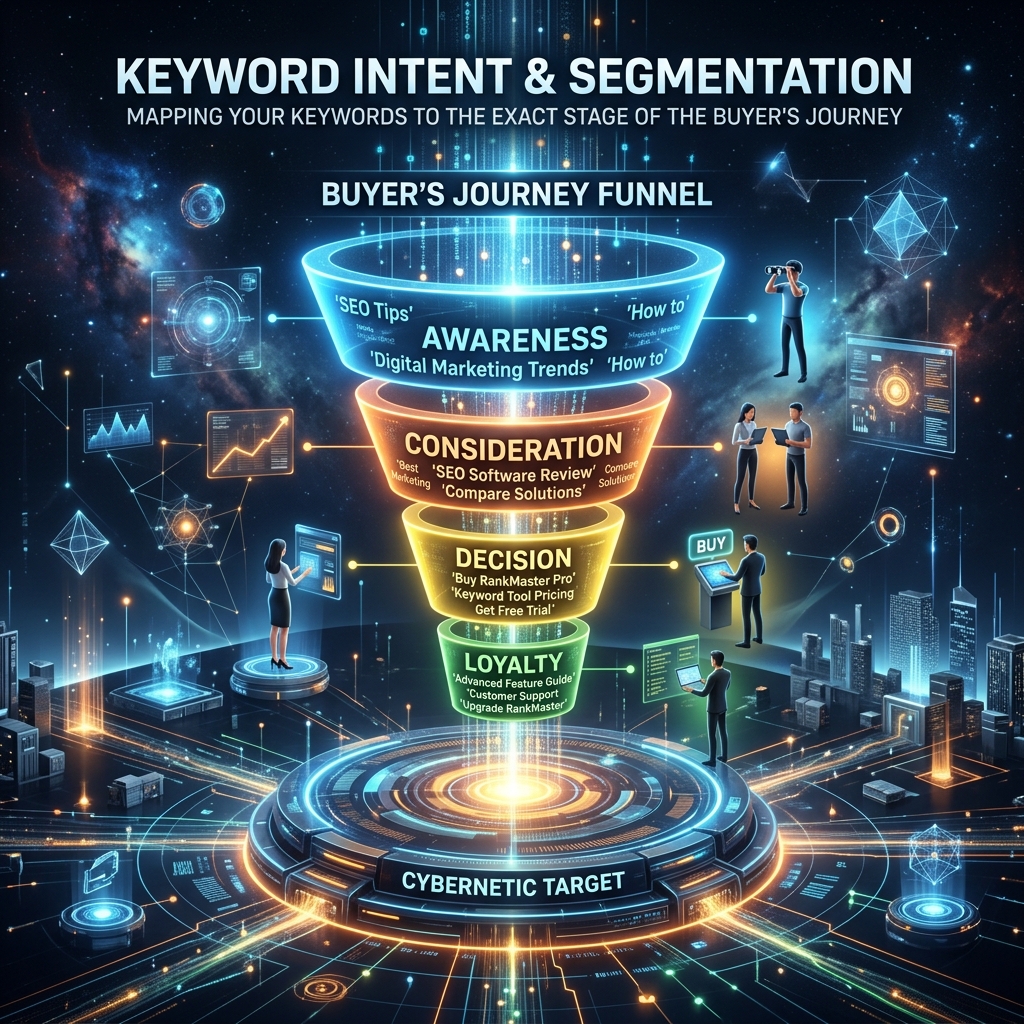
Stop treating all keywords the same. If you don't match the algorithmic intent of a query, you will never rank. Learn how to map modifiers to uncover exactly what your user—and Google's AI—wants to see.
Short Summary
A keyword without context is useless. The word "Plumbing" could mean someone wants to learn the history of aqueducts, or it could mean their kitchen is actively flooding. In this lesson, you will learn how to use "Modifiers" to segment your keyword lists into precise intent buckets. By doing so, you can align your content architecture perfectly with the buyer's journey and build the exact type of page Google requires for modern 2026 rankings.
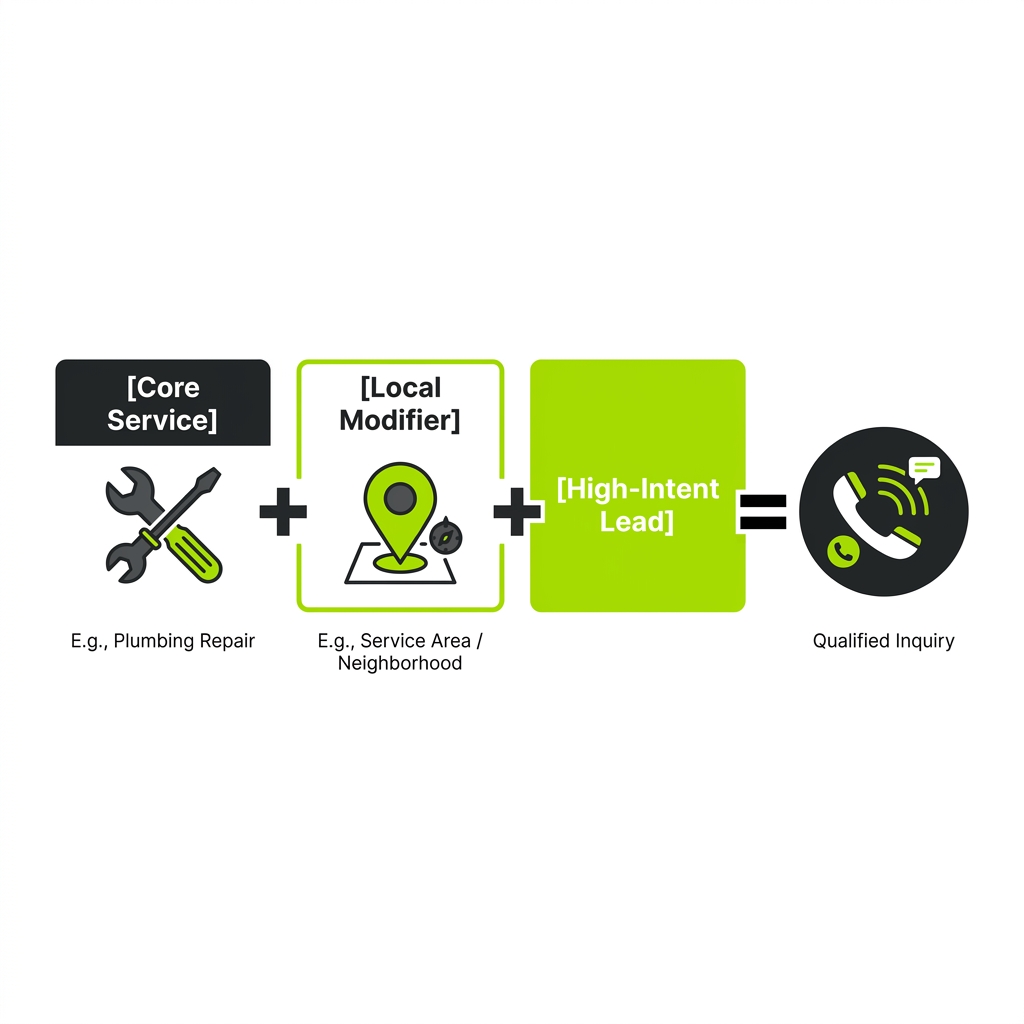
Imagine you are a mind reader at a car dealership. If someone thinks the word "Car," you don't know what to show them. But if they think "Buy used red sports car under 30k near me," you can hand them the exact keys. Keyword modifiers give you the superpower to read your customers' minds before they ever click your link.
Real-World Analogy
Think of your website as a massive retail ecosystem:
- The Informational seeker is scrolling TikTok or looking at window displays. (Keyword: "2026 winter coat trends") -> Send them to an engaging Blog Post or Video.
- The Commercial seeker is in the aisle holding two jackets, looking for reviews. (Keyword: "North Face vs Patagonia durability") -> Send them to a Comparison Guide or Review Page.
- The Transactional seeker is at the cash register with their credit card out. (Keyword: "Buy North Face Gotham jacket size L next day shipping") -> Send them straight to the optimized Product/E-Commerce Page.
A Modern 2026 Real Example
An agency analyzed a client's website (a B2B cybersecurity firm). The client was frustrated because their massive, 4,000-word "Ultimate Guide" wasn't ranking for "Hire Cybersecurity Consultant." The page was purely informational—reading like a university textbook about the history of cyber threats.
However, Google’s 2026 algorithm recognizes that users searching "Hire Cybersecurity Consultant" have Transactional intent. They don’t want to read a textbook; they want to see pricing, read client case studies, view trust badges, and book a consultation immediately.
The agency scrapped the blog post and built a conversion-focused Service Landing Page featuring a direct booking calendar, video testimonials, and an interactive ROI calculator. By matching the page format to the user intent, the page skyrocketed from Page 6 to the Top 3 in less than three weeks, driving high-ticket enterprise leads.
Technical Explanation: Intent Mapping
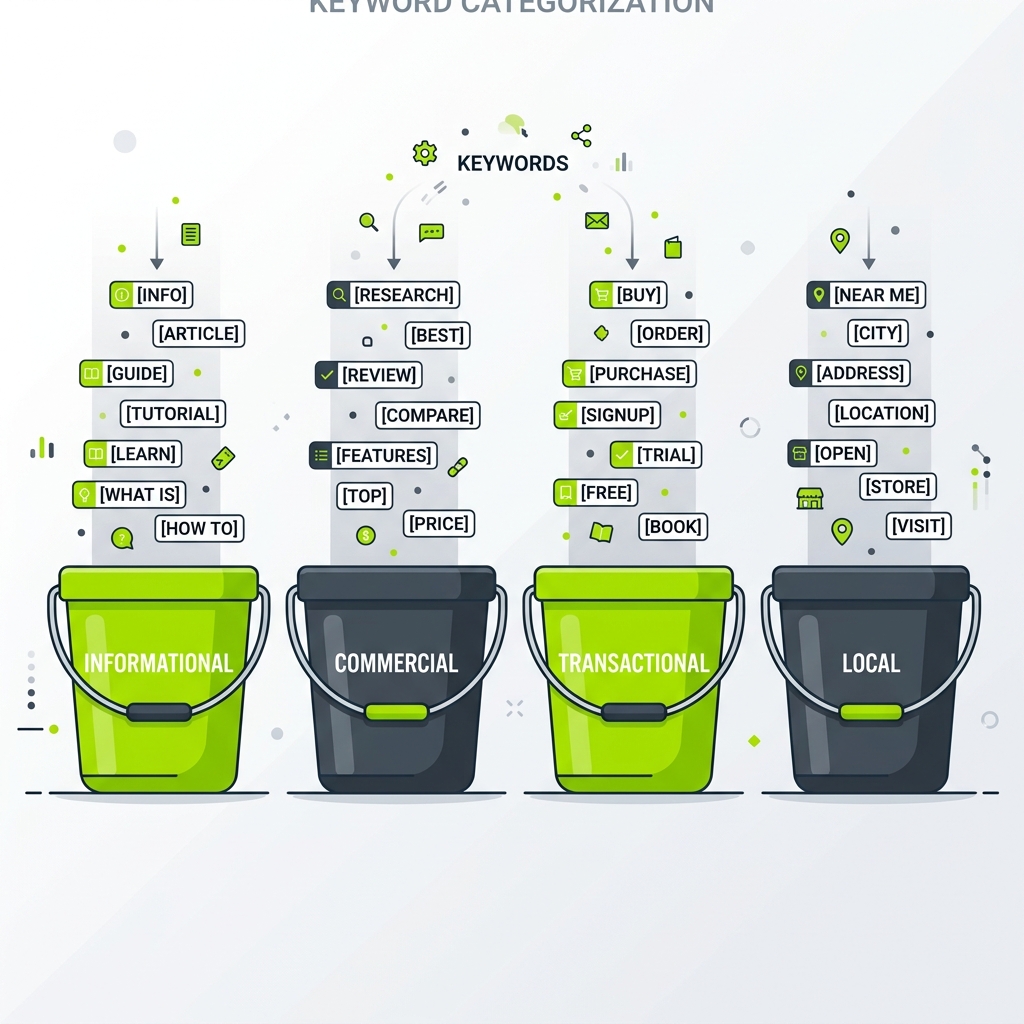
Keyword Segmentation is the process of grouping massive raw lists of keywords into logical buckets based on "Modifiers." A modifier is an auxiliary word added to a base query that drastically alters its semantic intent.
The Core Intent Buckets in 2026
| Intent Type | Common Modifiers | User Mindset | Best Page Format for 2026 |
|---|---|---|---|
| Informational | How, What, Why, Guide, Tips, Tutorial | "I want to learn or solve a problem." | Comprehensive Blog Post, How-to Video, FAQ, AI Overview-optimized content |
| Navigational | [Brand Name], Login, Support, Dashboard | "I want to find a specific website." | Homepage, Branded Service Pages, Portal Login |
| Commercial | Best, Top, Vs, Review, Alternatives | "I am researching before I buy." | Comparison Tables, Listicles, Objective Review Pages |
| Transactional | Buy, Hire, Cost, Price, Quote, Coupon | "I am ready to spend money right now." | E-Commerce Product Page, Service Landing Page, Pricing Page |
| Local | Near me, [City Name], [Zip Code], Local | "I need this service physically near my location." | Geo-Targeted Service Page, Google Business Profile (Maps) |
If you try to rank a Blog Post for a Transactional Modifier (e.g., writing an article called "How to Hire a Plumber in Dallas"), Google will completely ignore it because the algorithmic intent demands a Local Service Page.
Step-by-Step Implementation
- Dump Your Raw Keywords: Export your full list of targeted keywords from your SEO tool of choice.
- Filter by Informational Modifiers: Use spreadsheet tools (or AI) to filter for words like "how", "what", "guide", and "tips". These form your top-of-funnel Content Marketing strategy.
- Isolate the Money Words (Transactional/Commercial): Filter for "cost", "hire", "services", "company", "buy", and "near me". These are your primary bottom-of-funnel service page and product targets.
- Determine the Required Page Format: For your highest priority keywords, Google the term in an incognito window. Are the top results lists? Videos? Service pages? You must build whatever format Google has decided the user wants.
- Map to Your Site Architecture: Assign every single segmented keyword cluster to a specific URL on your website, ensuring no two pages compete for the exact same intent.
Actionable Steps for 2026
- Micro-Intent Mapping: Don't just stop at "Informational." In 2026, break it down further. Is the intent "Quick Fact Retrieval" (which will trigger an AI Overview) or is it "Deep Research" (which requires a 3,000-word authoritative guide)?
- Use ChatGPT for Bulk Segmentation: Don't manually sort thousands of keywords. Paste your CSV list into an LLM and prompt it to categorize every keyword into Informational, Navigational, Commercial, Transactional, or Local intent.
- The 'Fractured Intent' Rule: Sometimes a SERP will show 5 blog posts and 5 product pages. This means Google is unsure of the exact intent (Fractured Intent). In these cases, you can build a hybrid page or target the intent that best aligns with your business goals.
Common Mistakes
- Mixing Intents on One Page: Do not try to rank your homepage for "How to fix a leaky roof" AND "Roofing contractor near me." The intent is fundamentally split. Google will likely rank you for neither.
- Ignoring the Live SERP: The fastest and most accurate way to figure out algorithmic intent is to manually Google the keyword. Never assume you know the intent without looking at what Google is currently rewarding.
- Targeting Only Bottom of Funnel: If you only target Transactional keywords, you miss out on building trust and topical authority. A healthy site architecture targets the entire funnel.
Checklist
- I have grouped my raw keyword list into Informational, Commercial, Transactional, and Local buckets.
- I have assigned each intent bucket to the appropriate page format (e.g., Blog vs. Landing Page).
- I have manually verified the intent of my most important keywords by checking the live Google SERP.
- I have ensured that I am not targeting multiple conflicting intents on a single page URL.
Practical Exercise
- Open an incognito browser window.
- Search for a broad industry term like
SEO software. Analyze the results (you will likely see lists like "The 10 Best SEO Tools"). This is Commercial intent. - Now search for
Buy Semrush subscriptionorSemrush pricing. How do the results change? - Notice how the addition of one single Transactional modifier completely alters the landscape, shifting the SERP from affiliate blogs to the brand's exact checkout and pricing pages.
AI Prompt
Act as an Expert SEO Data Analyst. I will provide you with a raw list of keywords for my business. I want you to categorize them into a markdown table with the following columns:
1. Keyword
2. Intent Type (Informational, Commercial, Transactional, Local)
3. Recommended Page Format (e.g., Blog Post, Service Page, Pricing Page)
4. Estimated Funnel Stage (Top, Middle, Bottom)

Here are the keywords:
[Paste your list of 20-50 keywords]