
Local Keyword Research
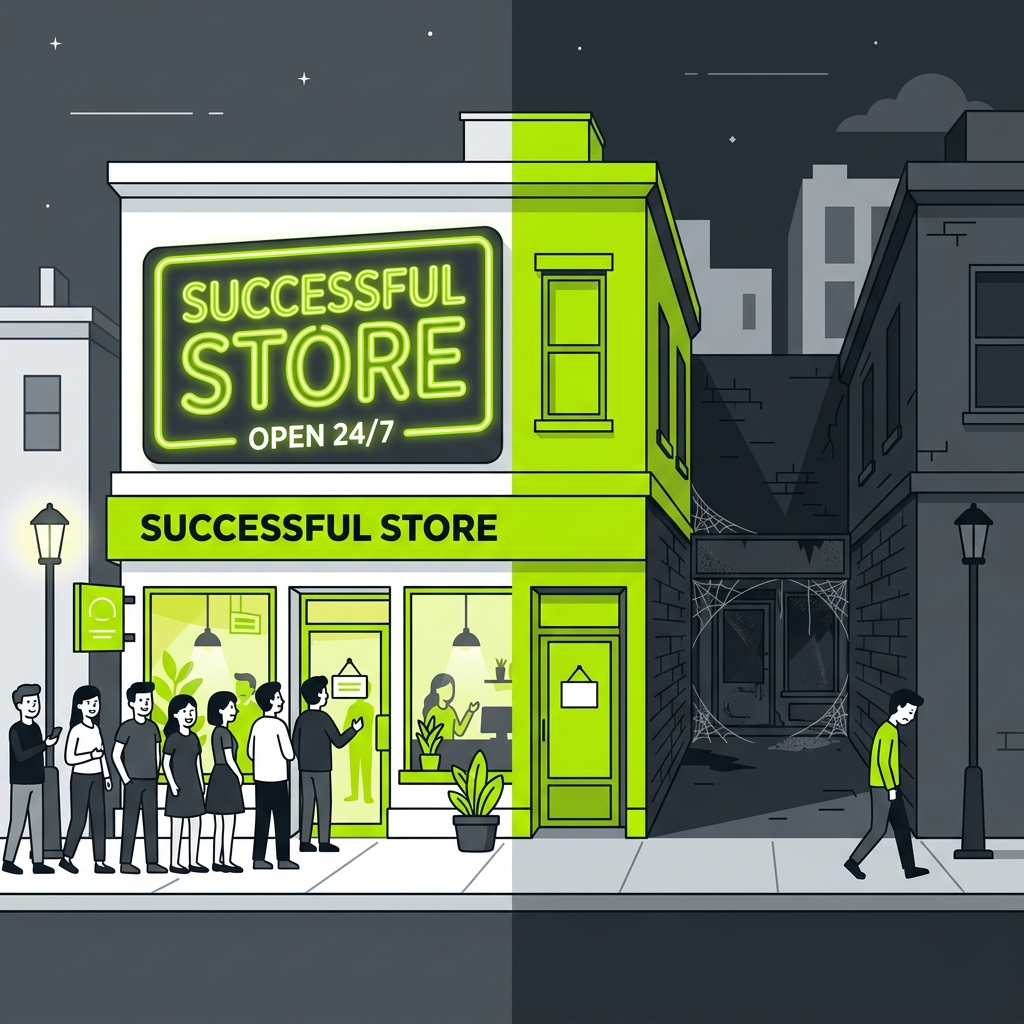
Dominate your physical market by mastering geo-targeted keywords. Learn how to capture the hyper-local intent that drives immediate foot traffic, phone calls, and revenue.
Short Summary
If you run a brick-and-mortar business or a local service agency, local keyword research is the only SEO that matters. Ranking nationally for "how to fix a pipe" might get you 100,000 views, but it won't drive a single local lead in your city. In this lesson, you will learn the exact formula for discovering geo-targeted keywords, understanding implicit vs. explicit location tracking, and optimizing for the 2026 Google Local Pack.
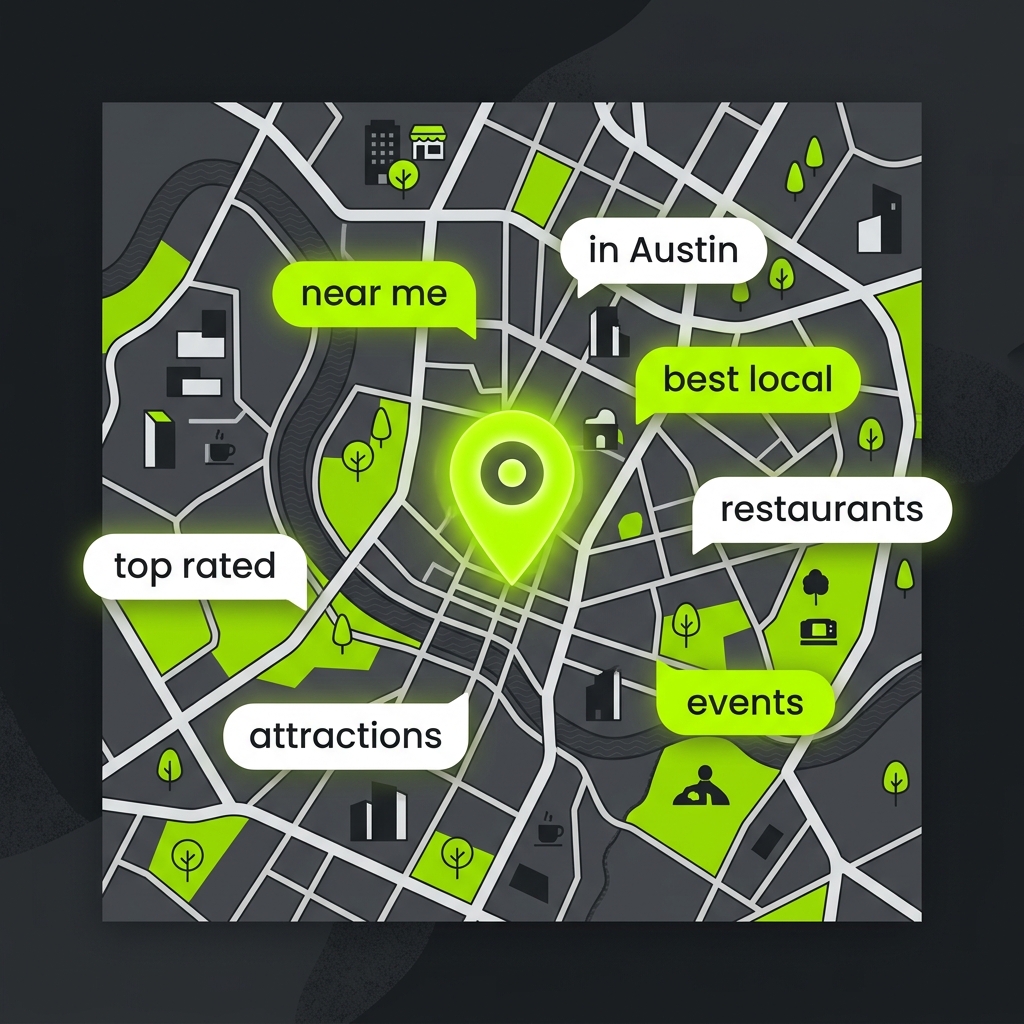
Trying to rank a local dentist for the national keyword "Dentist" is like trying to put up a billboard on the moon. Sure, it looks cool, but your customers are down here on Earth. Local keyword research is how you put your billboard directly in your customer's living room.
Real-World Analogy
Imagine you are fishing. National SEO is like casting a massive net into the middle of the ocean. You might catch a lot of fish, but you'll also catch old boots, tires, and seaweed. Local SEO is like dropping a highly specialized lure into a specific, small pond where you know the exact type of fish you want are currently swimming and hungry.
A Modern 2026 Real Example
A boutique law firm in Chicago wanted more high-ticket clients. Their previous agency spent thousands of dollars optimizing their site for the broad term "Corporate Law." They got traffic, but the leads were coming from Texas, California, and New York—completely useless because the firm was only licensed to practice in Illinois.
We ran a localized keyword audit and shifted their entire strategy. Instead of broad terms, we focused on "[Service] + [Hyper-Local Neighborhood]" keywords, such as "Corporate Formation Lawyer River North" and "Business Dispute Attorney The Loop."
While the search volume for these specific neighborhoods looked tiny in traditional SEO tools (often under 50 searches per month), the intent was sky-high. By ranking #1 organically and dominating the Local Pack for these specific Chicago neighborhoods, their qualified local lead volume increased by 400% in three months.
Technical Explanation: The Local Ecosystem
Local keyword research revolves around identifying the exact phrases people use when looking for a business in a specific geographic area.
In 2026, Google handles local queries entirely differently than national queries. Local searches almost always trigger the Local Pack (the Google Maps results that appear at the very top of the SERP, often integrating AI summaries of local reviews).
The Local Keyword Formula
The vast majority of local searches follow a simple, predictable formula: [Core Service] + [Geo-Modifier]
- Core Service: Roof repair, emergency plumber, divorce lawyer, pediatric dentist.
- Geo-Modifier: City name, county, neighborhood, street name, or "near me".
Example: Emergency Roof Repair in Downtown Austin
Implicit vs. Explicit Local Intent
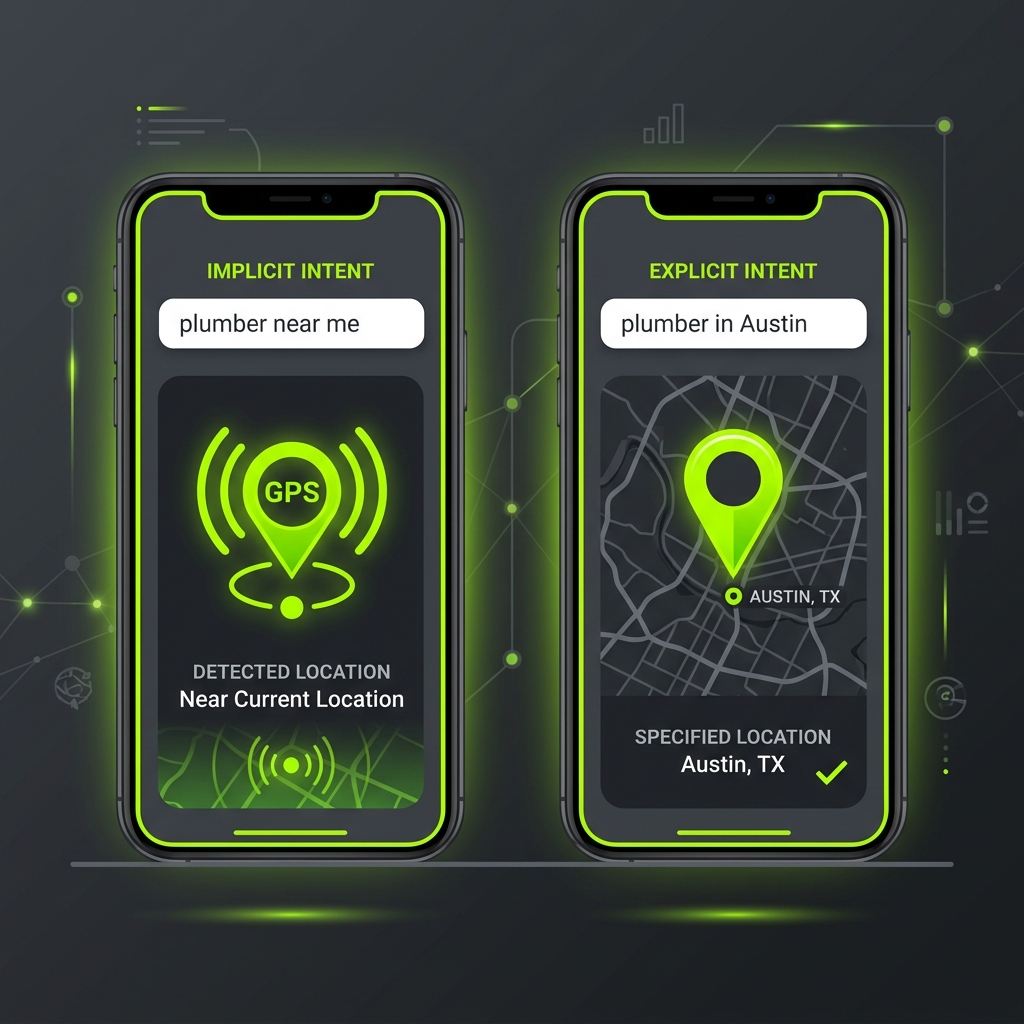
- Explicit Local Intent: The user types the location directly into the search bar (e.g., "Coffee shop in Brooklyn"). Google relies heavily on traditional on-page SEO (website content) to serve these results.
- Implicit Local Intent: The user types a generic service (e.g., "Coffee shop" or "Coffee shop near me"). Google uses the user's mobile GPS or desktop IP address to dynamically serve results based on proximity. You cannot rank for "near me" simply by stuffing the words "near me" on your website. You rank for it by having a highly optimized, active Google Business Profile located geographically close to the searcher.
Step-by-Step Implementation
- Map the Service Areas: Document every single city, county, and major affluent neighborhood your client is willing to drive to or service.
- Map the Core Services: Document every specific, revenue-generating service they offer.
- The Multiplier Matrix: Create a matrix combining every service with every location. (e.g., Service A + City 1, Service A + Neighborhood 1, Service B + City 1).
- Group into City/Location Pages: You cannot rank the homepage for 50 different cities. You must architect your site to include dedicated "Location Pages" (e.g.,
/locations/chicago,/locations/naperville). - Verify Local Pack Triggers: Search your target terms in an incognito window. If a Map Pack does not appear, Google may not consider the query to have local intent.
Actionable Steps for 2026
- Target Micro-Neighborhoods: The SERPs for major cities (like "Los Angeles") are saturated by massive directories. Zoom in. Target the specific affluent neighborhoods (e.g., "Silver Lake", "Los Feliz") where competition is non-existent but conversion rates are massive.
- Optimize for 'Near Me' via Entities: Since you can't optimize for "near me" via text, optimize your Google Business Profile by uploading photos with geo-tagged EXIF data, responding to reviews that mention specific local landmarks, and ensuring your Name, Address, and Phone number (NAP) are perfectly consistent across the web.
- Service Area Pages (SAPs) 2.0: Gone are the days of creating 50 identical pages where you just swap out the city name (Doorway Pages). In 2026, this triggers an immediate algorithmic penalty. Every location page must have unique content: local team photos, localized case studies, embedded Google maps, and localized testimonials.
Common Mistakes
- Keyword Stuffing Cities: Writing "We are a Chicago plumber providing Chicago plumbing services in Chicago, Illinois" looks terrible to humans and triggers spam filters in Google. Write naturally and rely on semantic relevance.
- Creating Doorway Pages: As mentioned, duplicating your homepage 20 times and just changing the H1 to a different city is a fast track to getting de-indexed.
- Ignoring the Google Business Profile (GBP): Your website is only half the battle. In local SEO, your GBP is often more important than your actual website. If you do keyword research but fail to put those keywords into your GBP services and categories, you will lose.
Checklist
- I have mapped out all the core services and products offered.
- I have identified the primary city, as well as 5-10 high-value secondary cities or neighborhoods.
- I have multiplied the services by the locations to create a master target keyword list.
- I have verified that these target keywords trigger a Local Map Pack in Google.
- I have planned a unique, localized landing page for each major service area.
Practical Exercise
- Open Google Maps on your computer or phone.
- Search for a generic service in your area (e.g., "Landscaping").
- Look at the top 3 results.
- Now, drag the map a few miles to an adjacent suburb or neighborhood and click "Search this area."
- Notice how the businesses ranking in the Local Pack change completely based on the geographic center of the map. This proximity factor proves why targeting specific micro-neighborhoods with dedicated content is so powerful.
AI Prompt
Act as a Local SEO Expert. My client is a [Business Type, e.g., High-End Remodeler] located in [Main City]. They serve the main city and the surrounding areas.

First, generate a list of the 10 most affluent surrounding suburbs or distinct neighborhoods near [Main City].
Second, create a matrix combining their top 3 services with those 10 locations to generate a master list of local long-tail keywords.
Finally, give me 3 ideas for how to make the content on these Location Pages unique so they don't get penalized as duplicate doorway pages.