
Programmatic SEO Pros & Cons
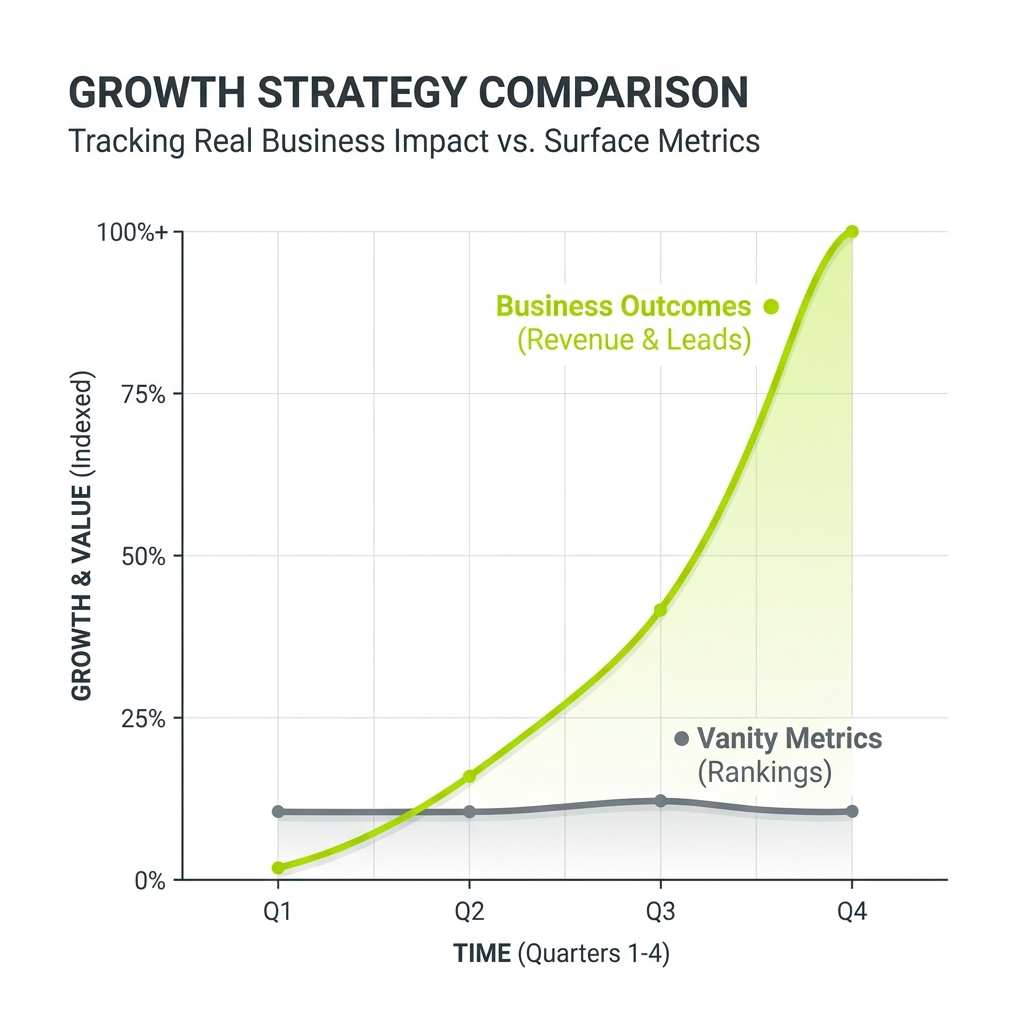
Programmatic SEO is akin to algorithmic leverage. When engineered correctly, it acts as a massive multiplier for your traffic and revenue. However, if engineered poorly, it can trigger catastrophic algorithmic penalties that nuke your entire domain.
Before investing engineering hours into a complex pSEO infrastructure, you must deeply understand the 2026 risk-to-reward ratio.
The Pros: Why Top Companies Rely on pSEO
1. Dominating Long-Tail, Zero-Competition Traffic
Standard SEO requires fighting for keywords with 10,000 monthly searches against domains with massive Domain Authority. Programmatic SEO flips the script. You target 10,000 different hyper-specific keywords that only get 1 to 5 searches a month. Because these queries are so specific (e.g., "SOC2 compliant payroll software for remote teams"), your programmatic page might be the only page on the internet that precisely answers the query.
2. Exceptionally High Conversion Rates
Search volume is a vanity metric; intent is revenue. Long-tail modifiers generated by pSEO imply absolute bottom-of-funnel intent. A user searching for a broad term is researching. A user searching for a hyper-specific, multi-modifier string is ready to buy, sign up, or convert immediately.
3. Decoupling Output from Human Bandwidth
In traditional content marketing, traffic scales linearly with writing capacity. To get 10x more traffic, you must hire 10x more writers. In pSEO, traffic scales with data. Building the database and template for 100 pages requires the exact same engineering effort as building it for 100,000 pages.
The Cons (and Severe Risks) in 2026
Google's algorithms, particularly the Helpful Content System and SpamBrain AI, have evolved specifically to combat low-quality programmatic SEO.
1. The Thin Content De-Indexing Penalty
If your database is shallow and your pages only differ by a single variable (like a city name), Google will classify your site as "Doorway Pages" or "Thin Content." The Consequence: A manual action penalty resulting in your entire domain being scrubbed from Google's index.
2. Crawl Budget Exhaustion
Googlebot allocates a finite "Crawl Budget" to your domain. If you suddenly inject 500,000 programmatic pages into your site architecture, Googlebot will waste its budget crawling low-value generated pages. The Consequence: Googlebot may stop indexing your high-value, manually written pillar content because it is lost in the programmatic bloat.
3. The Indexing Bloat Paradox
Having thousands of pages in Google's index that generate zero clicks actively harms your site's overall quality score. If you programmatically generate 50,000 pages, but 45,000 of them target keyword combinations that literally no human being has ever searched for, Google assesses your website as 90% useless.
[!CAUTION] The 2026 Golden Rule of pSEO: Never generate a page just because you have the data permutation. Only generate pages where you have verified search demand. Use programmatic pruning: write scripts that automatically add
noindextags to any programmatic page that hasn't received a single impression in Google Search Console after 90 days.