Advanced Tools & Automation
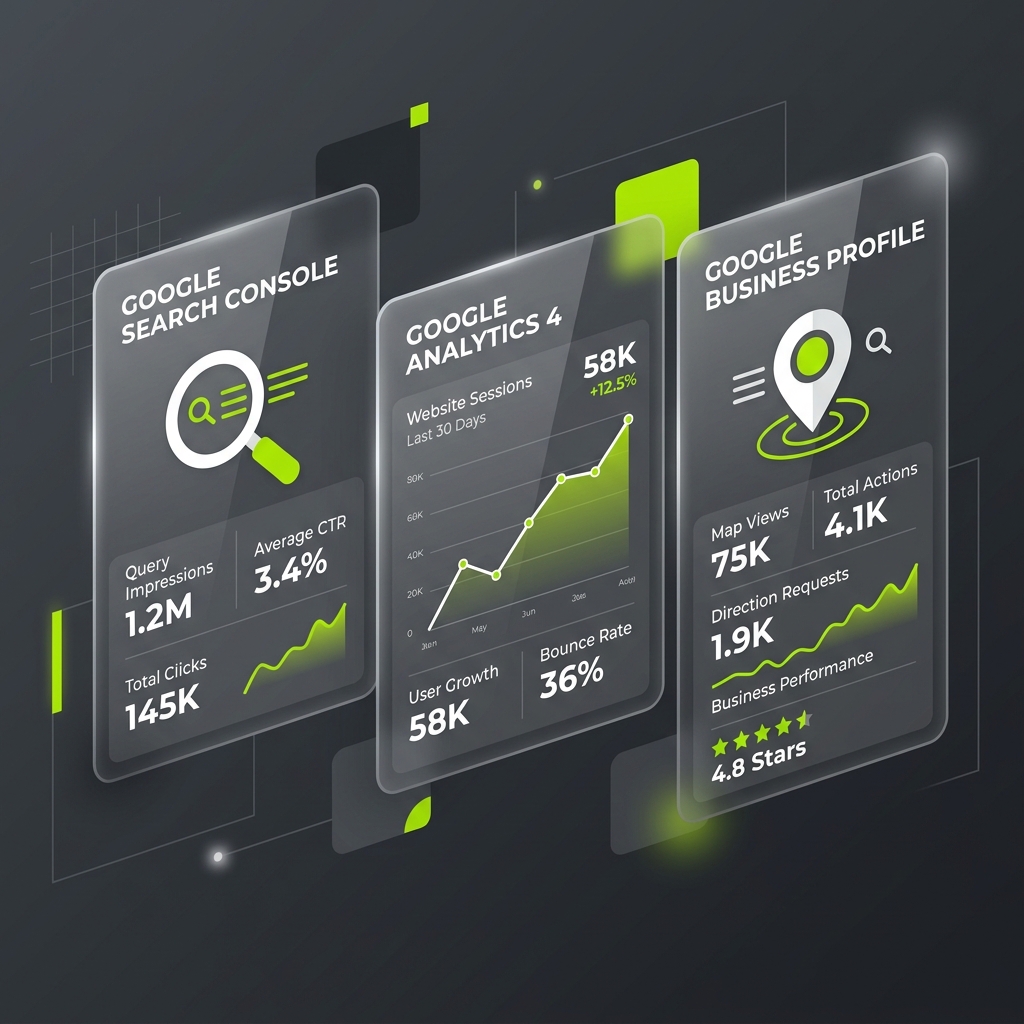
In 2026, scaling an SEO agency or managing enterprise portfolios is virtually impossible without robust automation. When you're dealing with hundreds of thousands of URLs across 50+ clients, standard UI-driven tools and manual spreadsheet manipulations become major bottlenecks. The modern SEO professional must bridge the gap between marketing and data science.
The Paradigm Shift: From UIs to APIs
If your team is still downloading CSV files from Google Search Console, manipulating them in Excel, and manually uploading data into a reporting dashboard every week, you are losing thousands of hours annually.
Scaling requires you to move out of the user interface and into the API. By leveraging Python, Node.js, or advanced no-code platforms like Make.com, you can directly interface with data sources like GSC, Ahrefs, Screaming Frog, and LLMs (like GPT-4 and Claude 3.5).
🛠 Actionable Step: Your First Automation Pipeline
Here is a blueprint for a classic 2026 SEO automation workflow:
- Data Ingestion: A Python script triggers every Monday at 3:00 AM. It calls the Google Search Console API and pulls the top 500 keywords where impressions have dropped week-over-week.
- Analysis: The script passes this data through an LLM via API, asking it to categorize the drops (e.g., "Seasonal", "Algorithm Shift", "Content Decay").
- Execution: For "Content Decay" flags, the script uses the WordPress API to pull the current article content, generates a list of suggested semantic updates, and automatically creates a Trello or Asana card assigned to your editorial team.
Enterprise-Grade Log Analysis
For massive e-commerce and publisher sites (500,000+ URLs), desktop crawlers like Screaming Frog are insufficient. They will crash, or at best, only give you a simulated view of your site.
You must graduate to cloud-based log file analyzers like Botify, Oncrawl, or Lumar (formerly DeepCrawl). These platforms integrate directly with your CDN (like Cloudflare) or server logs.
- Why it matters: They tell you exactly how Googlebot is traversing your site in real-time.
- The ROI: You can instantly identify crawl traps, infinite loop parameters, and orphaned pages that are hemorrhaging your Crawl Budget. In an era where Google is aggressively rationing its crawl resources due to AI generation costs, optimizing your crawl budget is non-negotiable.
Advanced Rank Tracking & Dynamic Alerts
Stop manually checking SERPs. Standard rank tracking is dead; dynamic, intent-based tracking is the new standard.
Use platforms like AccuRanker, SE Ranking, or Data Studio (Looker) connected to BigQuery. Set up sophisticated automated alerts via Slack or Microsoft Teams.
Example Alert Thresholds for 2026:
- 🔴 Critical: "Client X dropped out of the Top 3 for their primary 'head' keyword. Competitor Y just captured the AI Overview for this query."
- 🟡 Warning: "A direct competitor just published a new cluster of 15 articles targeting our core topical map. Review required."
- 🟢 Opportunity: "Keyword Z just entered page 2. Adding internal links from our top 3 highest-authority pages could bump it to page 1."
Modern Programmatic SEO (pSEO)
Programmatic SEO in 2026 isn't about spinning thin, useless location pages. It's about combining vast datasets with fine-tuned LLMs to create thousands of genuinely helpful, highly specific pages.
- The Stack: Airtable/Supabase (Database) + OpenAI/Anthropic API (Content Generation) + Webflow/Next.js (Frontend).
- The Strategy: Build template pages that dynamically inject hyper-local or highly specific data points, enriched by AI-generated insights that provide real value, fully compliant with Google's Helpful Content guidelines.
By mastering these advanced tools and automation strategies, your team can pivot from tedious data entry to high-level strategic thinking, enabling you to take on 5x the clients without increasing headcount.