
SEO Mindset & Goals
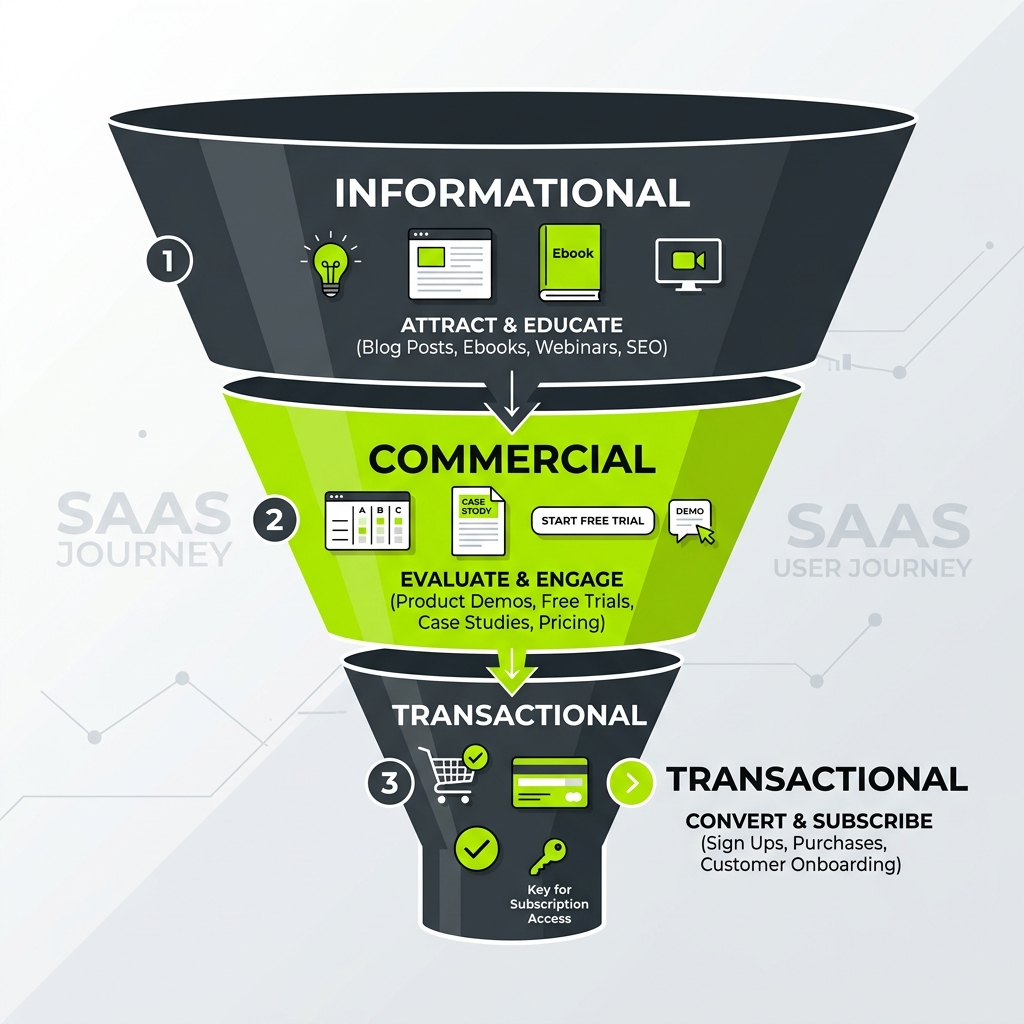
Shift your perspective from "chasing search engine algorithms" to "solving real problems for real customers." In the modern 2026 search landscape, where AI overviews and zero-click searches are prominent, discovering how to build a user-first mindset is the only sustainable way to achieve repeatable rankings, generate high-quality leads, and scale your revenue.
Short Summary
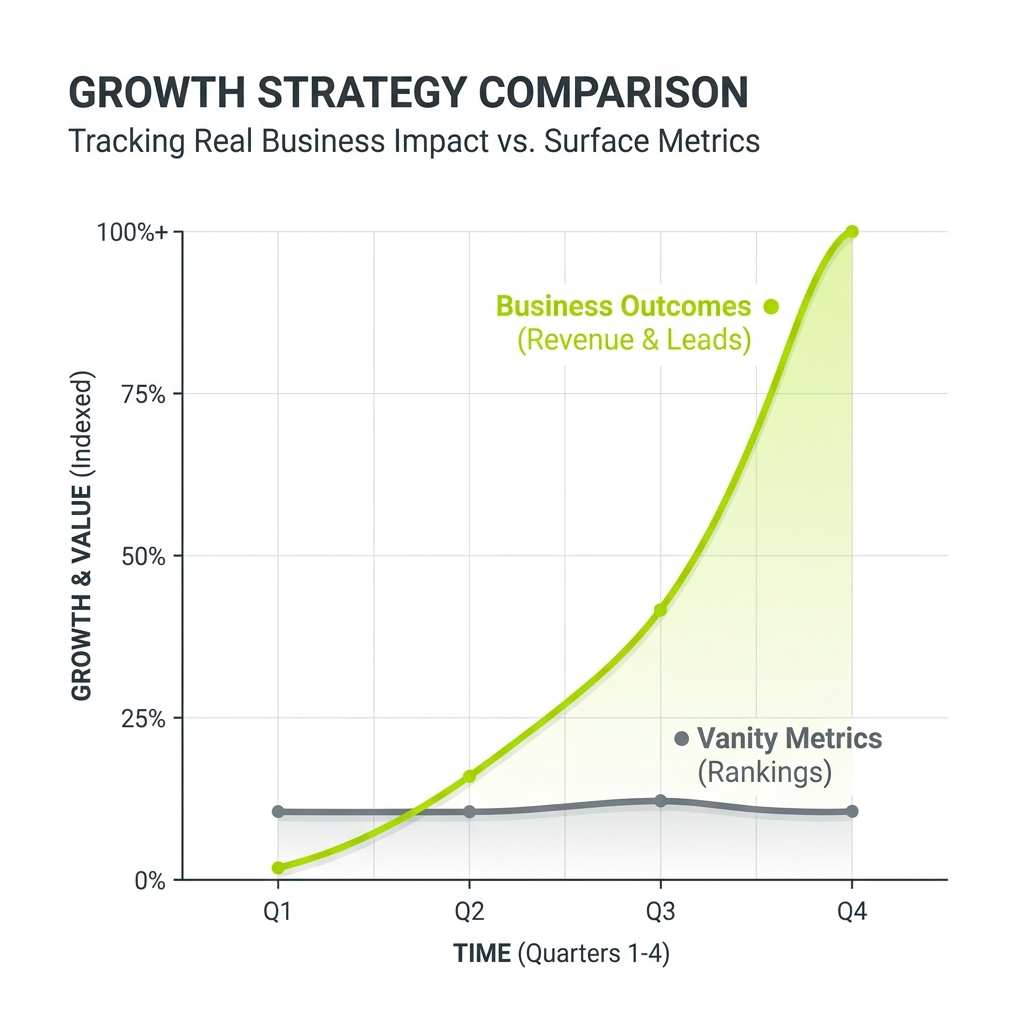
In this critical lesson, you will learn the core philosophy underpinning modern SEO: Google unequivocally rewards content that is helpful, reliable, and deeply people-first. We will systematically shift your mindset away from outdated vanity metrics (like arbitrary keyword traffic or pure impressions) and toward tangible business outcomes (like qualified inbound phone calls, booked appointments, and closed jobs). This mental framework is essential for selling and delivering SEO services with absolute confidence.
The Ultimate Librarian Imagine you are rushing to a librarian to find a book on how to fix a burst pipe flooding your basement. The librarian won’t hand you a book that just repeats the phrase "burst pipe repair" 500 times on the first page. They will hand you the book with the clearest, easiest-to-follow diagrams, urgent step-by-step instructions, and emergency contact numbers.
Google is the ultimate librarian. Your website is the book. If you focus entirely on creating the most genuinely helpful, authoritative resource, the librarian will naturally—and repeatedly—recommend it.
Real-World Analogy: The Luxury Dental Clinic
Think about opening a high-end dental clinic. If you invest heavily to build a clinic with a stunning, expensive waiting room, premium lighting, and massive billboards, people might visit once. But if you hire terrible, unqualified dentists and have a confusing booking system, patients will never return. Worse, negative word-of-mouth will quickly spread, destroying your reputation.
SEO operates on the exact same principles. Your search rankings are merely the shiny billboard on the street. Your website's content, loading speed, structure, and user experience are the dentists inside. If you successfully rank #1 for "Best Dental Clinic Near Me" but your website is confusing, painfully slow on mobile, and lacks a clear way to book an appointment, your SEO efforts are completely wasted. You must engineer the entire experience from search to sale.
Real Example: Landscaping in 2026
Consider two competing landscaping companies trying to dominate search results in a competitive city.
- Company A relies on outdated 2018 tactics, focusing purely on "beating the algorithm." They stuff the phrase "best landscaping services in [City]" 40 times onto their homepage. They use generic AI-generated text with no real insight. The page is unreadable, robotic, and visitors immediately hit the "back" button (creating a negative user signal) to find someone else.
- Company B obsesses over the user. They create a beautifully structured page detailing their specific services. They embed high-resolution, original before-and-after photos of recent yard transformations. They feature authentic video testimonials from real locals, clearly display their pricing tiers, and provide a frictionless "Get a Free Quote in 60 Seconds" button.
Google's modern algorithms—powered by deep learning and vast behavioral data—are highly sophisticated. They immediately detect that users bounce from Company A's site but linger on Company B's site, interact with the videos, and fill out forms. Over time, Company B permanently outranks Company A because they built a verifiable "helpful, reliable, and people-first" experience. Company B generates revenue; Company A generates frustration.
Technical Explanation: From Algorithms to User Outcomes
The traditional SEO mindset treated search engines as rudimentary, robotic keyword-matching machines. You put a keyword in the title, URL, and body 5 times, and you ranked.
The modern SEO mindset recognizes that search engines (specifically Google's complex core ranking systems and AI-driven evaluations) measure the holistic user experience and Topical Authority.
Google’s "Helpful Content System" and its rigorous E-E-A-T guidelines (Experience, Expertise, Authoritativeness, and Trustworthiness) explicitly state that content must be created primarily for users, not to manipulate search engines. If you write content solely to rank, the system will eventually flag and demote it.
The SEO pipeline is no longer a checklist of "add keywords to a page." It is a comprehensive business-outcome funnel:
- Research & Intent: What specific problem is the user urgently trying to solve? (e.g., "emergency 24/7 pest control for termites")
- Optimize & Answer: How can we provide the fastest, most authoritative, and most reassuring answer or service on our website?
- Monitor & Measure: Are users actually staying on the page? Are they clicking the phone number? What is the bounce rate?
- Refine & Convert: How can we iteratively improve the copy, trust signals, or UI to increase the final conversion rate?
When you sell SEO services to a local roofing contractor, you are never just selling "Page 1 rankings." You are selling the result of those rankings: predictable, high-margin phone calls from homeowners panicking about a leaking roof.
The Shift in Metrics
| Metric Type | Example Metric | Business Value | Client Perception |
|---|---|---|---|
| Vanity Metric | 100,000 Impressions | None (unless they click) | Confusing & Meaningless |
| Vanity Metric | Ranking #1 for "History of Roofs" | Low (Informational only) | "Why isn't my phone ringing?" |
| Business Outcome | 50 Qualified Form Submissions | High (Direct Leads) | Exciting & Tangible |
| Business Outcome | 20 Phone Calls for "Emergency Repair" | Ultra-High (Immediate Revenue) | "You literally saved my business!" |
Step-by-Step Implementation
To adopt this outcome-driven SEO mindset and apply it profitably to your projects, follow these exact steps:
- Define the True Business Goal: Before even opening an SEO tool, ask the client (or yourself), "What constitutes a successful, paying lead?" For a plumber, it's a phone call. For a SaaS company, it's an enterprise software demo. For an agency, it's a booked discovery call.
- Map the Emotional User Journey: Put yourself intensely in the searcher's shoes. If someone searches "emergency roof repair," they are stressed and likely have water dripping on their floor. Your page must instantly communicate trust, speed, local presence, and feature a massive tap-to-call button.
- Audit for "People-First" Value: Brutally evaluate your existing pages. Are they genuinely the best resource on the internet for that query, or do they exist merely to target a keyword? If they aren't uniquely helpful, rewrite them immediately.
- Shift Your Reporting Metrics: Stop sending clients automated reports highlighting "impressions" or "keyword positions" that don't pay their bills. Start tracking and celebrating "conversion rate," "qualified form submissions," and "inbound calls."
- Standardize the Outcome: Document this user-first approach into your agency's standard operating procedures (SOPs). Ensure every site you build defaults to high-quality, conversion-optimized content from day one.
Common Mistakes to Avoid
- Selling Rankings Instead of Leads: If you promise a client "Rank #1", they will complain endlessly if they drop to #2. If you promise a client "More qualified phone calls", they will happily pay your retainer even if they rank #3, as long as the phone keeps ringing.
- Writing for Bots, Not Humans: Using unnatural, robotic language to force keywords into sentences. It destroys trust, plummets conversion rates, and guarantees a penalty from modern helpful content algorithms.
- Ignoring the Final Conversion: Spending 100 hours and thousands of dollars driving traffic to a beautiful service page that hides the phone number, lacks a contact form, and provides no clear next step. Traffic without conversion is just an expense.
Your Mindset Checklist
- I have explicitly defined the primary business goal (the lead/conversion event) for my current project.
- I deeply understand that Google algorithms now reward helpful, reliable, people-first content over mechanical keyword stuffing.
- I have evaluated my target landing page from the perspective of a stressed, hurried, or skeptical customer.
- I am setting up tracking for metrics that actually matter (leads/revenue/calls) rather than just vanity metrics.
- I am fully prepared to sell the value of SEO (revenue and growth) rather than the mechanics (rankings and backlinks).
Practical Exercise: The Empathy Test
Think of a high-value local service business in your area (e.g., an HVAC installation or water damage restoration company).
- Open a private/incognito browsing window and search for "[service] in [your city]".
- Click on the top 3 organic results (ignore the sponsored ads).
- Ask yourself critically: "Which of these sites is actually the most helpful, trustworthy, and easiest to use on a mobile phone?"
- Write down three specific things the top-ranking site does well to build immediate trust (e.g., a sticky header with a phone number, pictures of branded trucks, transparent pricing, licensed/bonded badges).
AI Prompt: Translating SEO to Sales
Use this engineered prompt to help translate mechanical SEO jargon into compelling business outcomes when speaking to clients or planning your own lead-gen strategy.
Act as a world-class sales consultant for an elite SEO agency. I am pitching a comprehensive SEO campaign to a local [insert business type, e.g., Roofing] company. The owner is skeptical and only cares about getting more high-paying jobs, not technical jargon about backlinks or core web vitals. Write a punchy, persuasive 3-paragraph pitch explaining why they need our "people-first, revenue-focused" SEO strategy. Focus entirely on how this framework will generate predictable, high-quality inbound leads and dominate their local competitors.