
What is SEO?
Discover the true meaning of Search Engine Optimization and why it's the highest ROI channel for local lead generation and agency growth in 2026.
Short Summary
SEO (Search Engine Optimization) is the process of improving your website so that search engines like Google show it to people actively searching for your services. In this lesson, you will learn the difference between organic and paid traffic, how AI overviews are changing the landscape, and why SEO consistently yields the highest long-term return on investment (ROI) for any business.
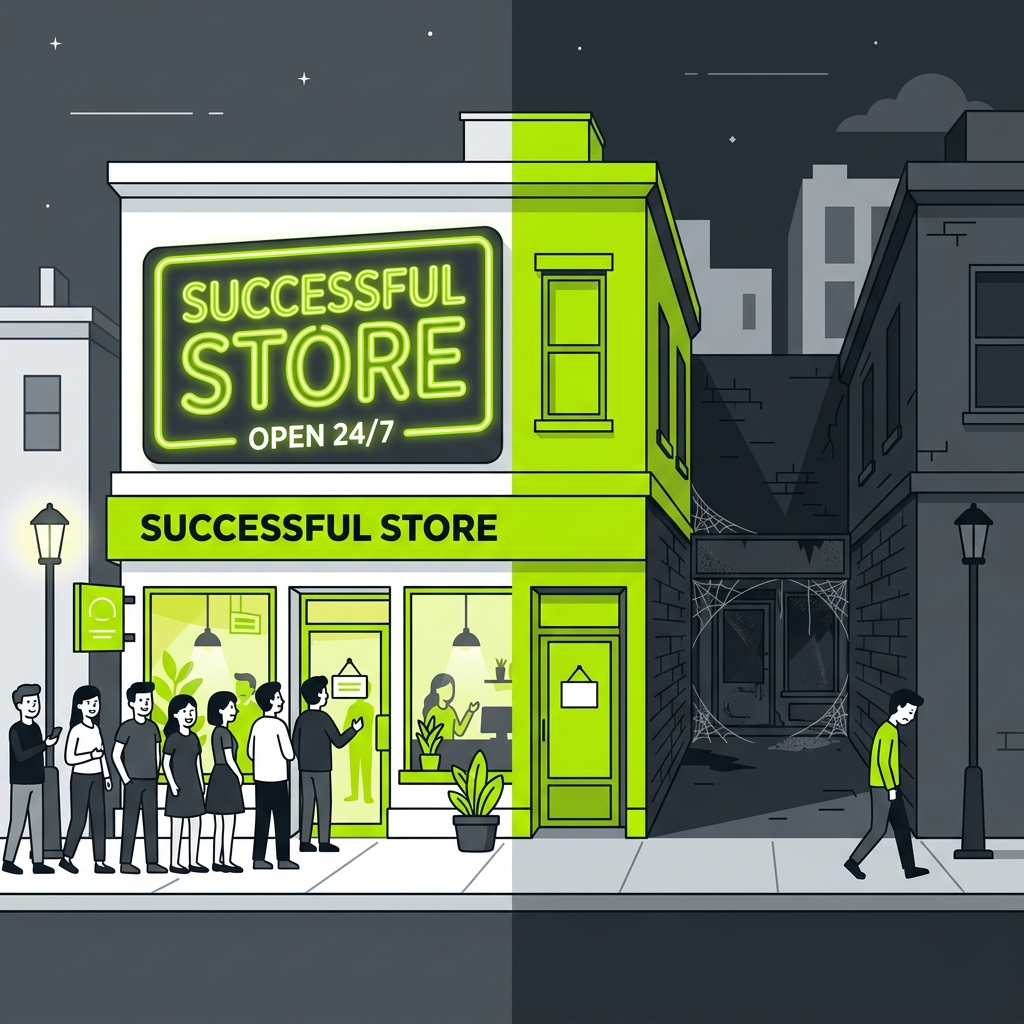
Imagine you own the best bakery in town, but your shop is hidden down a dark alley with no signs. No matter how good your bread is, you won't get any customers. SEO is like moving your bakery to the busiest intersection in the city and putting up a massive, glowing neon sign that specifically activates when someone thinks "I'm hungry for bread."
Real-World Analogy
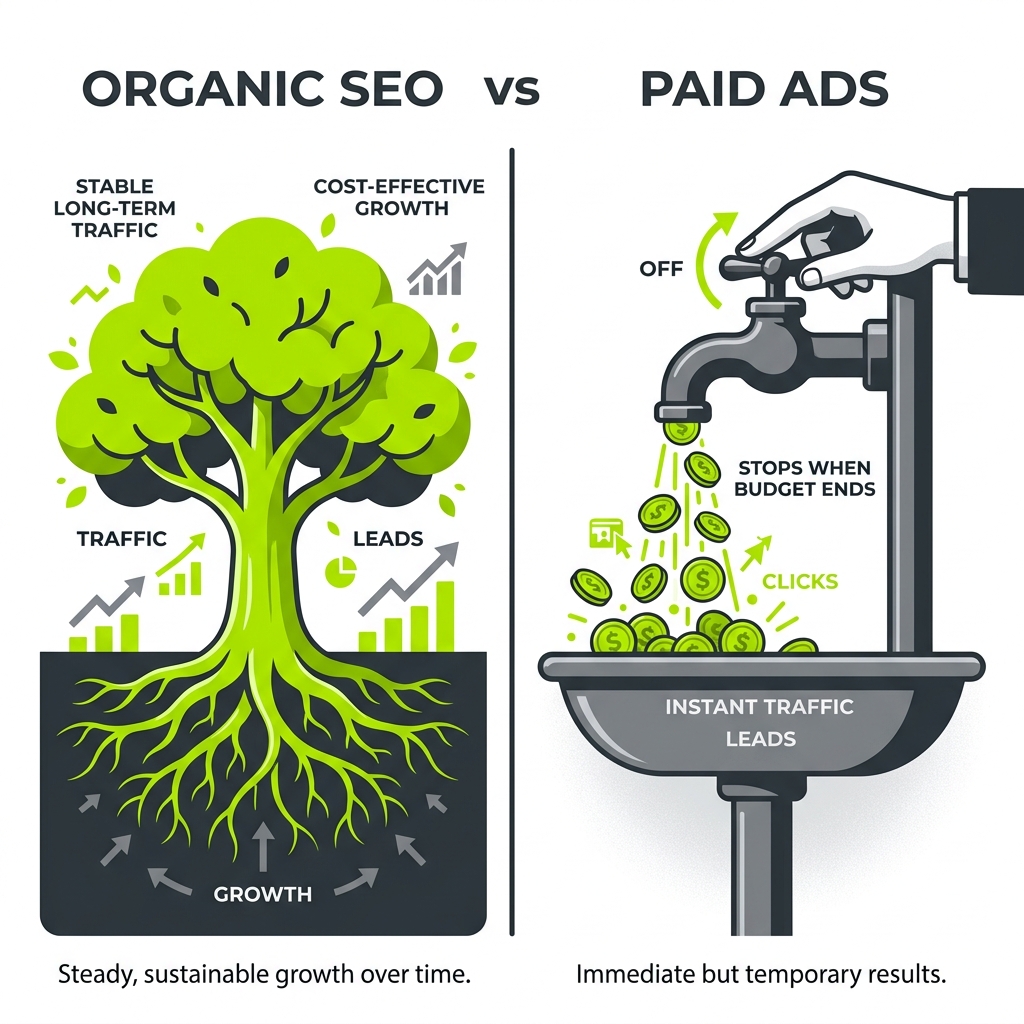
Paid search (like Google Ads) is like renting a billboard. You get immediate visibility, but the second you stop paying, the billboard comes down, and your traffic drops to zero.
SEO is like buying the building that the billboard sits on. It takes longer to acquire, but you own the asset. Once it's built, it pays dividends for years, giving you free visibility 24/7 without paying per click.
Real Example (2026 Context)
Consider a local plumbing company that relies purely on buying leads from platforms like Yelp or running expensive Google Local Services Ads. They struggle with low profit margins because every lead costs them $50 to $150, and ad costs have spiked due to intense competition.
By investing in SEO and ranking their "Emergency Plumber [City]" service page organically, they capture free, exclusive leads directly from Google. Because they rank #1 organically and appear as an authoritative source in Google's AI Overviews, they look infinitely more trustworthy than the sponsored ads. Their cost-per-lead drops significantly, giving them higher profit margins and a predictable, recession-proof business.
Technical Explanation: The Modern SEO Ecosystem
Search Engine Optimization (SEO) is the systematic process of improving a website's visibility in unpaid (organic) search engine results. Moving into 2026, it encompasses four major disciplines:
- Technical SEO: Optimizing the website infrastructure (HTML structure, edge-caching speed, React/JavaScript rendering, and schema markup) so search engine crawlers and AI bots can instantly access and comprehend the content.
- On-Page SEO: Optimizing the semantic relevance of the content. This involves moving beyond exact-match keywords to topical authority—proving to the algorithm's natural language processing models that your page completely resolves the user's search intent.
- Off-Page SEO: Building authority and trust signals from other domains across the web. This includes high-quality editorial backlinks, digital PR, brand mentions, and hyper-local citations.
- E-E-A-T & Entity Optimization: Demonstrating Experience, Expertise, Authoritativeness, and Trustworthiness. Google now tracks your brand as a specific "entity" across the web. Reviews, author credentials, and verifiable offline signals heavily dictate online rankings.
When these four pillars align, Google's algorithm confidently identifies your site as the most authoritative, relevant, and helpful result for a search query.
Step-by-Step Implementation
When explaining SEO to a new client or starting a new project, follow this structured framework:
- Evaluate Current Organic Footprint: Look at how many leads the business currently gets without paying for ads. Audit their current branded vs. non-branded search traffic.
- Calculate Paid Equivalence: Determine how much it would cost to buy that same traffic via Google Ads (this establishes your baseline SEO monetary value).
- Identify High-Intent Targets: Pinpoint the 3-5 absolute most valuable transactional services the business offers (e.g., "Dental Implants", "Root Canals", "Invisalign").
- Set Realistic Long-Term Expectations: Educate the client that modern SEO is a 6-12 month compounding investment that builds an appreciating digital asset, insulating them from rising ad costs.
Common Mistakes
- Treating SEO as a "Set It and Forget It" Plugin: Many web designers install an SEO plugin, configure the title tags, and tell the client "SEO is done." SEO is a continuous process of strategic iteration and competitor out-maneuvering.
- Confusing Google Ads with Organic Rankings: Clients often incorrectly assume paying for Google Ads will boost their organic SEO rankings. They are distinct, isolated systems.
- Overlooking Zero-Click Searches and AI: Failing to optimize for Google's AI Overviews or Local Packs. For local service businesses, ranking in the Google Maps "Local Pack" drives significantly more phone calls than standard blue links.
Actionable Checklist
- I can articulate the core differences between organic search and paid ads.
- I understand the four pillars: Technical, On-Page, Off-Page, and E-E-A-T.
- I have identified the most lucrative, high-intent service keywords for my target business.
- I can confidently pitch the compounding, long-term ROI of SEO to a prospective client.
Practical Exercise
- Open a private/incognito browsing window.
- Search for a local service term like "Foundation repair contractor [your city]".
- Scroll past the "Sponsored" tags at the top.
- Analyze the Google Maps Local Pack, then examine the standard organic links below it, paying attention to any AI-generated summaries at the top.
- Identify the businesses ranking organically—these entities are monopolizing the free, high-intent leads in your city every single day.
AI Prompt
Use this modern prompt to generate an irresistible script for selling the value of SEO.
Act as a seasoned SEO agency owner operating in 2026. I am speaking to a local [business type, e.g., Roofing] contractor who currently burns $5,000/month on Google Ads with diminishing returns and zero SEO strategy. Write a concise, highly persuasive email explaining the difference between renting expensive traffic (Ads) and owning an appreciating digital asset (SEO), and pitch a brief discovery call. Highlight how organic authority builds unbreakable trust.